He was talking about
accidental death from prescription drug overdoses. The doctor, Gary
Franklin, medical director for Washington state's Department of Labor
and Industries, recounted terrifying case after case and told me it was
the saddest thing he had ever seen.
I remember him telling me about a teenager dying because he had taken too much narcotic medication after a dental procedure.
The most common scenario,
he said, involves a man in his 40s or 50s who visits a doctor with a
backache and walks out with a pain pill prescription. About three years
later, typically, the man dies in his sleep from taking too many pills,
or mixing them with alcohol.
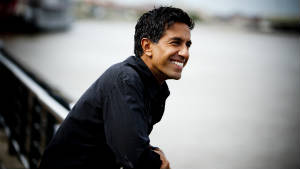
Dr. Sanjay Gupta
They don't intend to die,
but more than 20,000 times a year -- every 19 minutes, on average --
that is exactly what happens. Accidental overdoses are now the No. 1
cause of accidental deaths in the United States, surpassing car crashes.
As a neurosurgeon working
in a busy level 1 trauma hospital, I had an idea that the problem was
growing -- but the numbers still boggle the mind.
The number of pain prescriptions increased 600% from 1997-2007,
according to the U.S. Centers for Disease Control and Prevention. In
the United States, we now prescribe enough pain pills to give every man,
woman and child one every four hours, around the clock, for three
weeks.
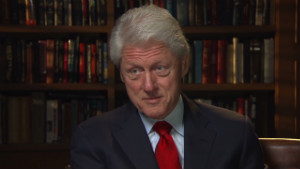 Clinton: U.S. popping to many pills
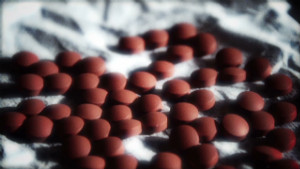 Prescription drug overdoses on the rise
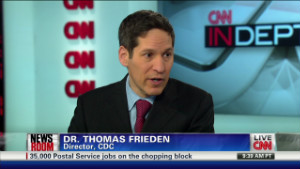 'Prescription pain meds can be risky'
We often pay close
attention if a celebrity dies of an overdose, but truth is, it's our
friends, neighbors and yes, our own family members who are dying.
In fact, the person who
really brought the issue to my attention was former President Bill
Clinton. He called me a few months ago, and I could immediately tell he
was broken up about something. I had worked for him in the White House
in the late '90s, talked to him countless times since then, and I had
never heard him like this.
Two of his friends had both lost sons, he told me. The cause: accidental overdose.
I will never forget how
he put it. "Look, no one thinks having a few beers and an Oxycontin is a
good idea, but you also don't expect to die." I knew at that moment we
needed to do our part in the media to shine a bright light on this issue
and find solutions that work.
As a starting point, 80% of the world's pain pills are consumed right here in the United States, according to 2011 congressional testimony from the American Society of Interventional Pain Physicians.
No doubt, many are for
perfectly legitimate reasons and are not misused or abused. Yet
culturally, we have become increasingly intolerant of even minor amounts
of pain and increasingly comfortable with taking heavy-duty
medications.
We know, however, that
after just a few months of taking the pills, something starts to change
in the body. The effectiveness wears off, and patients typically report
getting only about 30% pain relief, compared with when they started.
Even more concerning, a subgroup of these patients develop a condition
known as hyperalgesia, an increased sensitivity to pain.
As you might guess, all
of this creates a situation where the person starts to take more and
more pills. And even though they are no longer providing much pain
relief, they can still diminish the body's drive to breathe.
If you are awake you may
not notice it, but if you fall asleep with too many of these pills in
your system, you never wake up. Add alcohol, and the problem is
exponentially worse. People who take pain or sleeping pills and drink a
couple glasses of wine are playing Russian roulette.
I am not at all sorry for coming off dramatic or scary as I write this. I only wish I had been this dramatic years ago.
Truth is, it is easier
for a doctor to write a prescription than to explore other effective
options to combat pain. And it is easier for patients to take those
prescription pills than to search for alternatives themselves. Both
those things must absolutely change.
In my upcoming
documentary, I will explain how we arrived in this deadly situation, but
more importantly, explore solutions to address it.
I crisscrossed the
country finding what worked and what didn't. I spoke to doctors,
patients and families who lost a loved one -- even one man I met who
shares my last name. As I said, it hits close to home.
Clinton has dedicated a
significant part of his post-presidency domestic efforts to this cause,
and it will not come as a surprise that he has identified areas where we
can all make a difference. You will hear his thoughts on this issue for
the first time in the documentary.
Throughout my career, I
have traveled the world and seen problems so intransigent that I thought
solutions would never come. With accidental deaths due to prescription
drugs, however, we have an opportunity to fix the problem and end this
large man-made epidemic.
